
Air conditioning systems are complex machines, and like any mechanical system, they can encounter a variety of issues that impact their performance. Understanding the most common problems and how to troubleshoot them can save homeowners time, money, and discomfort. From simple fixes like changing a filter to more intricate issues requiring professional expertise, a well-informed approach is key to maintaining a comfortable indoor environment.
Key Insights for AC Troubleshooting
- Regular Maintenance is Paramount: Many common AC problems, such as reduced airflow, inefficient cooling, and even complete breakdowns, can be prevented with routine tasks like cleaning or replacing air filters, clearing debris from the outdoor unit, and scheduling annual professional tune-ups.
- Thermostat and Electrical Checks First: Before delving into complex diagnostics, always verify that your thermostat settings are correct, its batteries are fresh, and that circuit breakers haven’t tripped. These are often the simplest and quickest solutions to AC issues.
- Recognizing When to Call a Professional: While many basic troubleshooting steps can be performed by homeowners, certain problems like refrigerant leaks, persistent electrical faults, or compressor failures require the expertise of a qualified HVAC technician for safe and effective repair.
This guide will navigate through the most prevalent AC problems, offering practical troubleshooting steps and highlighting when it’s crucial to seek professional help.
The Core Culprits: Most Frequent AC Malfunctions
Several issues consistently top the list of reasons why air conditioning systems falter. These often relate to airflow, electrical components, and the refrigerant cycle.
Airflow Obstructions: The Silent Efficiency Killer
One of the most frequent and easily preventable problems is restricted airflow. A healthy AC system relies on unimpeded air circulation to cool effectively. When this flow is compromised, the system struggles, leading to various symptoms.
Dirty or Clogged Air Filters
The air filter is your AC’s first line of defense against dust and debris. When it becomes caked with contaminants, it significantly restricts airflow into the system. This not only reduces cooling efficiency but can also lead to more severe problems like a frozen evaporator coil.
Troubleshooting: Regularly check and replace your air filter, ideally monthly during peak usage. Hold the filter up to the light; if you can’t see through it, it’s time for a change. Replacing a dirty filter is a quick and inexpensive fix that can dramatically improve your AC’s performance.
Blocked Outdoor Condenser Unit
The outdoor unit, or condenser, needs ample space to dissipate heat effectively. If it’s surrounded by debris, overgrown foliage, or other obstructions, its ability to release heat is impaired, leading to reduced cooling and increased energy consumption.
Troubleshooting: Ensure there’s at least two feet of clearance around the outdoor unit. Remove any leaves, grass clippings, or other debris. Gently vacuum the coil fins with a soft-bristle brush, being careful not to bend them.
Closed or Blocked Vents and Ductwork Issues
Inside your home, closed registers or obstructed vents can also limit airflow. Furthermore, leaky or poorly installed ductwork can cause a significant loss of cooled air before it reaches your living spaces.
Troubleshooting: Verify that all supply and return vents are open and unobstructed by furniture or curtains. For ductwork issues, professional inspection and sealing are often required.
The Electrical Backbone: Powering Your Comfort
Electrical issues can manifest in various ways, from a completely non-functional unit to intermittent operation.
AC Not Turning On: The Power Problem
If your AC won’t turn on at all, the first place to look is at its power supply.
Troubleshooting:
- Thermostat Settings and Batteries: Ensure your thermostat is set to “cool” and the temperature is lower than the room’s current temperature. If battery-powered, replace dead batteries.
- Circuit Breaker: Check your home’s electrical panel for a tripped circuit breaker associated with your AC unit. Reset it if it’s in the “off” or “tripped” position. If the breaker repeatedly trips, it indicates a more serious electrical problem requiring professional attention.
- Outdoor Unit Power: Confirm the outdoor unit is plugged in, if applicable, and that its dedicated outdoor breaker fuse is intact.
Electrical Control Failures
Corrosion of wires, faulty capacitors, or failing contactors can lead to the AC short cycling (frequently turning on and off) or failing to start.
Troubleshooting: While some minor electrical checks can be done by a homeowner, issues like faulty capacitors or loose wiring are best handled by a qualified technician to avoid injury and further damage.
Cooling System Integrity: Refrigerant and Coils
The core function of an AC is to cool, and when it fails to do so, issues with the refrigerant or coils are often to blame.
AC Not Blowing Cold Air / Blowing Warm Air
This is a clear indicator that the cooling process is compromised.
Troubleshooting:
- Dirty Air Filters/Coils: As mentioned, clogged filters and dirty outdoor coils reduce efficiency.
- Low Refrigerant: Refrigerant is the substance that absorbs heat from your home. Low levels, usually due to a leak, mean the system cannot cool effectively. This requires a professional to detect the leak, repair it, and recharge the system.
- Frozen Evaporator Coil: This often occurs due to insufficient airflow (dirty filter, blocked vents) or low refrigerant. If you see ice on the indoor coil, turn off the AC and let it thaw. Then, address the underlying airflow problem.
Short Cycling: AC Constantly Turning On and Off
When an AC unit turns on and off frequently without completing a full cooling cycle, it’s called short cycling. This can be caused by restricted airflow, refrigerant issues, electrical faults, or an improperly sized unit.
Troubleshooting: Check filters and vents for obstructions. If these are clear, it may point to refrigerant problems or a faulty thermostat. An oversized AC unit can also cause short cycling, as it cools the space too quickly and then shuts off, only to turn back on shortly after.
Beyond the Basics: Other Notable Problems
While the aforementioned issues cover a broad spectrum, other problems can arise, often linked to neglect or wear and tear.
Water Leaks or Drainage Problems
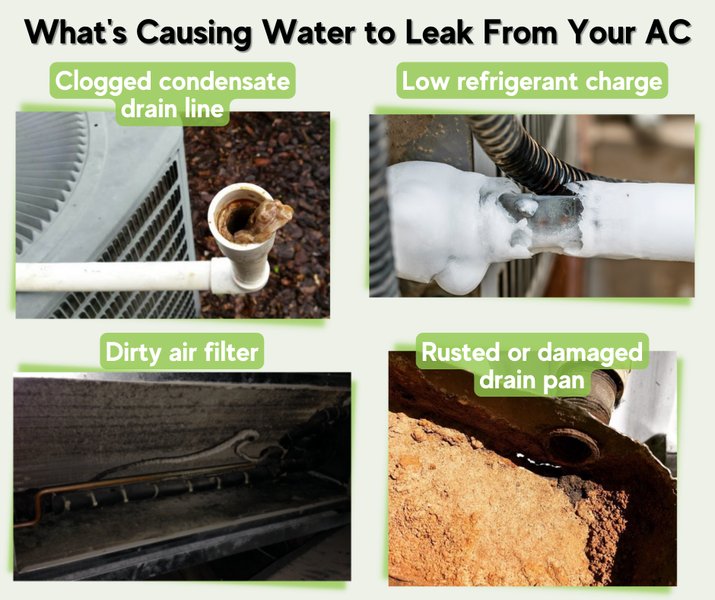
If you notice water pooling around your indoor unit or dripping from the ceiling, it’s often a sign of a clogged condensate drain line or a frozen evaporator coil that has thawed.
Troubleshooting: A blocked condensate drain can be cleared by using a wet/dry vacuum or by carefully flushing it with a vinegar-water solution. If it’s due to a frozen coil, address the underlying airflow or refrigerant issue after thawing the coil.
Strange Noises or Odors
Unusual sounds (rattling, humming, screeching) or smells (musty, burnt) can indicate various underlying problems.
- Noises: Rattling might be loose panels or debris. Humming could be an electrical issue like a failing capacitor. Screeching often points to a worn motor bearing or belt.
- Odors: A musty smell usually indicates mold or mildew in the condensate drain or on the evaporator coil. A burnt smell suggests an electrical component is overheating.
Troubleshooting: For noises, inspect for loose parts or debris. For odors, check for blockages in the drain line and consider professional cleaning for mold. Electrical smells warrant immediate shutdown and professional inspection.
The Importance of Preventative Maintenance
Proactive maintenance is the best defense against unexpected AC breakdowns and high repair costs. A consistent maintenance schedule helps extend the lifespan of your unit, improve its efficiency, and ensure consistent comfort.
When to Call a Professional HVAC Technician
While many problems can be resolved with simple troubleshooting, certain issues demand the expertise of a qualified technician. These include:
- Refrigerant Leaks: Handling refrigerant requires specialized tools and licensing due to environmental regulations and safety concerns.
- Persistent Electrical Issues: Repeatedly tripping circuit breakers, burning smells, or signs of damaged wiring indicate complex electrical problems that are dangerous to DIY.
- Compressor Failure: The compressor is the heart of your AC system. If it fails, replacement is a complex and costly repair best left to professionals.
- Complex Diagnostics: If you’ve performed basic checks and the problem persists, or if you’re unsure about the cause, a technician can accurately diagnose and repair the issue.
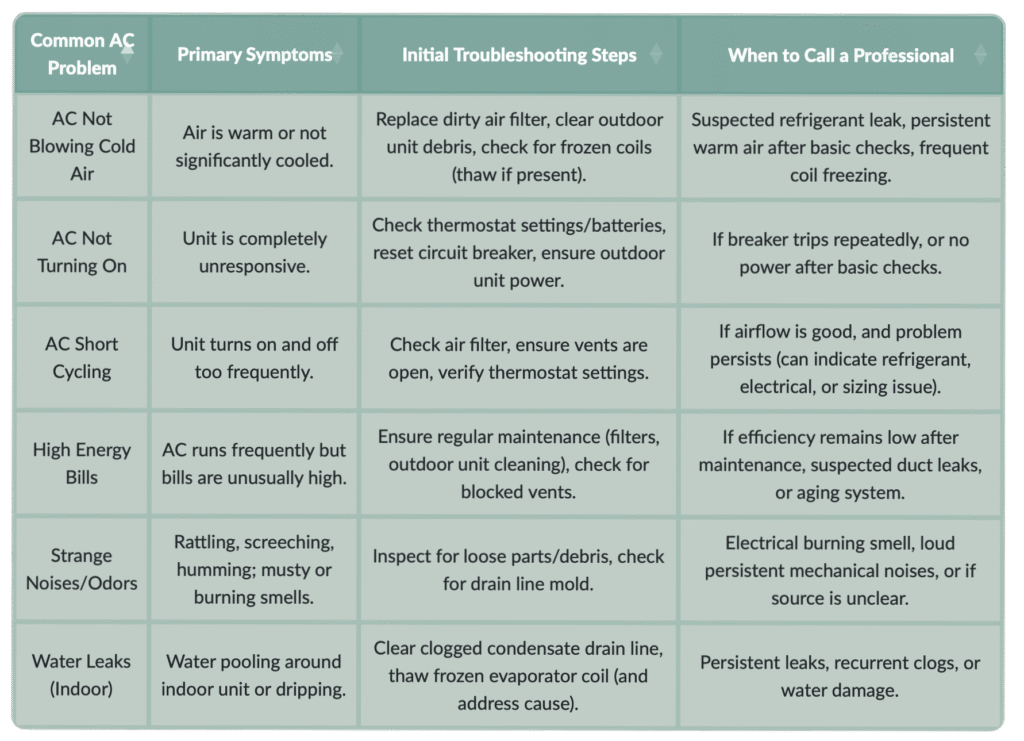
This table summarizes key AC problems, their typical symptoms, homeowner troubleshooting steps, and critical indicators for when professional help is essential. It serves as a quick reference guide for diagnosing and addressing issues efficiently.
Conclusion: A Proactive Approach to AC Health
Maintaining a comfortable home environment relies heavily on a well-functioning air conditioning system. Many common AC problems can be traced back to a few key areas: obstructed airflow, electrical issues, and problems within the refrigerant cycle. By understanding these root causes and implementing regular preventative maintenance—such as timely filter changes, keeping the outdoor unit clear, and ensuring proper thermostat operation—homeowners can significantly reduce the likelihood of breakdowns and extend the life of their units. While simple troubleshooting steps empower individuals to address minor glitches, recognizing when to call a qualified HVAC professional for complex issues like refrigerant leaks or significant electrical faults is paramount for safety and effective repair. A proactive and informed approach ensures your AC continues to provide efficient and reliable cooling, year after year.
Frequently Asked Questions
Why is my AC running but not cooling?
This is a common issue often caused by a dirty air filter restricting airflow, low refrigerant levels due to a leak, or a frozen evaporator coil. Check your filter first and ensure the outdoor unit is clear of debris. If the problem persists, especially if you suspect a refrigerant leak, it’s best to call a professional.
What should I do if my AC is leaking water inside?
Water leaks indoors typically point to a clogged condensate drain line or a frozen evaporator coil. Turn off your AC, check the drain line for blockages and clear it if possible. If the coil is frozen, let it thaw completely and then address potential causes like a dirty filter or low refrigerant.
How often should I change my AC filter?
It is generally recommended to check and change your AC filter every one to three months, especially during peak usage seasons. Homes with pets, allergies, or higher dust levels may require more frequent changes.
Can I fix a refrigerant leak myself?
No, refrigerant leaks should only be handled by a certified HVAC professional. Refrigerants are regulated substances, and special tools and expertise are required to safely detect, repair, and recharge the system without harming the environment or yourself.
Why is my AC making a strange noise?
Strange noises can indicate various problems. Rattling might be loose panels or debris. A screeching sound often suggests a problem with a motor bearing or belt. A persistent humming could be an electrical issue like a failing capacitor. If you hear unusual noises, it’s wise to investigate for obvious obstructions or call a technician if the source is unclear or seems serious.
Get your free estimate
Get a Quote
Your satisfaction is our top priority! We proudly offer a 100% Happiness and 100 days Guarantee on all our Services.